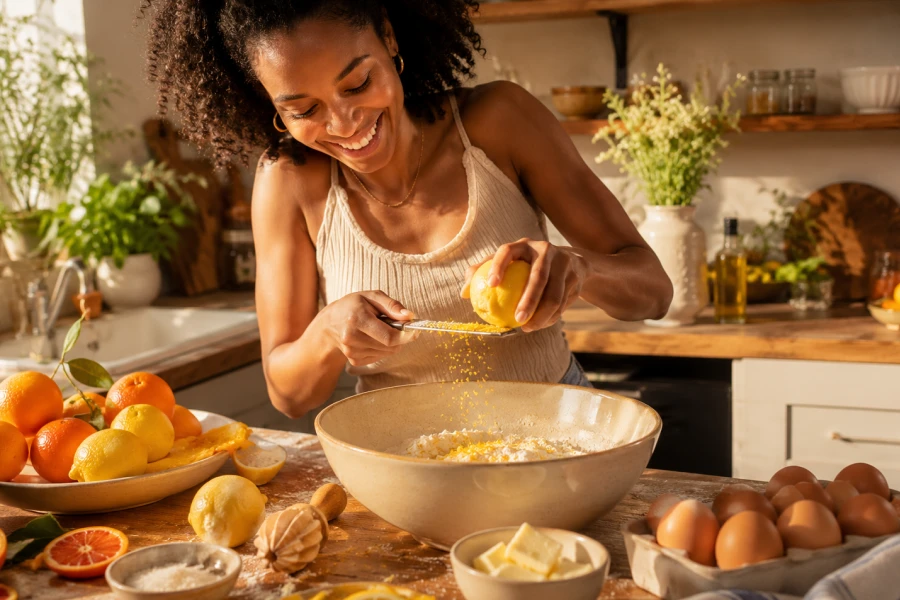
Some ingredients create flavor, while others change the entire atmosphere of cooking. Baking with winter citrus does both at once. The peel scents your hands, the juice brightens a batter, and the finished dessert feels more alive. Even a simple loaf can feel special with orange zest. A tart can seem more inviting with a glossy lemon filling. The best cozy seasonal bakes let bright fruit meet familiar comfort. They do not need complicated decorations or unusual equipment. They simply need thoughtful balance. That makes citrus an especially friendly ingredient for home bakers.
Baking with winter citrus begins with choosing and preparing the fruit carefully. Pick fruit that feels heavy for its size and smells fragrant. Wash the peel well before zesting because the outer oils matter. Zest only the bright colored layer, not the bitter white pith beneath. Juice the fruit after zesting to make each piece work harder. Strain seeds before adding liquid to a batter or filling. Taste a small piece when the variety is unfamiliar. Some oranges are gentle, while some lemons are sharply tart. Those differences help determine how much sugar the dessert needs. Good preparation gives every later step a stronger foundation.
Your fruit choice shapes the dessert long before it reaches the oven. Orange suits warmer flavors such as cinnamon, cardamom, and brown sugar. Lemon pairs naturally with berries, vanilla, and creamy fillings. Lime adds a sharper edge that works well with coconut or ginger. Grapefruit calls for enough sweetness to balance its distinctive bitterness. Explore citrus zest methods that let the fruit’s perfume remain prominent. Fine zest spreads easily through cookies and cakes. Wider strips can infuse syrup, cream, or sugar. One thoughtful choice can shape the entire flavor story. This is why the fruit deserves attention before the mixing starts.
Baking with winter citrus rewards thoughtful pairings more than excessive additions. Almond flour gives lemon cakes a tender, nutty base. Dark chocolate can make orange taste deeper and less sweet. Ginger lends warmth to grapefruit and lime. Vanilla gives sharp flavors a softer edge. Cream cheese supports citrus in bars and frostings. Honey can make tart fruit taste rounder and more floral. Choose one supporting flavor that feels natural with the fruit. Then keep the rest of the dessert simple. A clear pairing makes the citrus taste more intentional. It also keeps the finished bake from feeling confused.
Zest and juice do different jobs, even though they come from the same fruit. Zest contributes fragrance and concentrated flavor without much moisture. Juice delivers acidity, brightness, and sometimes extra liquid. Use zest when you want aroma throughout a batter. Use juice when you want a glaze, syrup, curd, or soaking liquid. A few winter baking plans can help you choose recipes that use each part effectively. Do not add extra juice to a recipe without considering the structure. Too much liquid can make a cake dense or a filling loose. Treat each element as useful in its own way. That attention produces cleaner flavors and better textures.
Baking with winter citrus can brighten classics you already know how to make. Add orange zest to banana bread for a warmer finish. Stir lemon into a glaze for pound cake. Fold lime zest into coconut cookies. Brush a simple syrup over a warm citrus loaf for extra moisture. These changes are small enough to feel approachable. They also make routine baking feel more connected to the season. Keep one version familiar when trying a new flavor. That gives you a useful point of comparison. The best experiments are often the ones that build on confidence. Familiar foundations make new ideas easier to enjoy.
Baking with winter citrus brings confidence through repetition because its techniques transfer easily. Once you understand zest, juice, sugar, and balance, many desserts become less intimidating. Make one cake twice and change only the fruit. Compare orange with lemon or lime with grapefruit. Use bright dessert combinations to find practical pairings when inspiration feels low. Keep notes about which versions taste best after cooling. Notice how the aroma changes with different spices. That observation builds skill more reliably than rushing toward difficult projects. Repetition turns citrus baking into a comfortable creative habit. The kitchen starts feeling more open to experimentation.
Winter baking becomes more inviting when bright fruit joins the familiar rituals. The process starts with a peel, a scent, and a small decision. Choose the fruit that suits the mood you want. Use zest for fragrance and juice for clear acidity. Pair the citrus with one supporting flavor rather than many. That simplicity gives the finished dessert more focus. A small adjustment can make a standard bake feel completely new. Repeating a favorite combination builds quiet confidence. Soon, a bag of citrus becomes a source of plans instead of a forgotten countertop decoration. That is the charm of baking with seasonal fruit.




Leave a comment