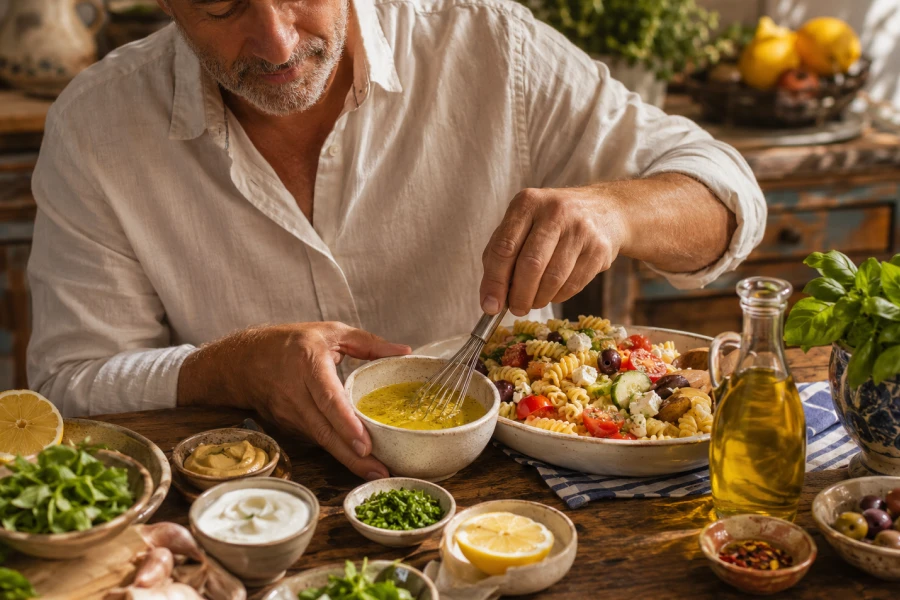
Dressing often determines whether a pasta salad feels fresh or forgettable. Pasta salad dressing combinations give ordinary ingredients a clear point of view. A tangy dressing can make roasted vegetables feel lighter. A creamy one can soften strong greens and smoky proteins. The best choice depends on what the bowl needs, not what is trending. Begin with pasta shape choices because the noodles influence how dressing clings. Spirals hold thicker mixtures, while small shells catch tiny bits of herbs and cheese. Smooth shapes suit lighter vinaigrettes and delicate ingredients. When pasta and dressing cooperate, every bite tastes more composed.
Pasta salad dressing combinations need a clear direction before you start whisking. Decide whether the bowl should taste bright, creamy, savory, spicy, or herb-forward. That choice keeps the ingredients from pulling in separate directions. A lemon vinaigrette suits cucumbers, herbs, and feta. A smoky paprika dressing works with corn, beans, and grilled vegetables. Creamy mustard dressing pairs well with potatoes, chicken, and crunchy celery. Build the dressing around one dominant flavor rather than several competing notes. Then choose ingredients that reinforce that direction. A cohesive bowl feels more satisfying than a complicated one. Clarity is what makes a simple dressing memorable.
Acid, creaminess, and salt each have a different job in cold pasta. Vinegar and citrus wake up the other ingredients. Yogurt, mayonnaise, or blended beans create body and softness. Cheese, olives, capers, and mustard add savory depth. Balance comes from letting each role remain distinct. Add salt in small stages because cold food can be deceptive. Use colorful salad combinations as a visual cue for flavor variety. Bright vegetables often need an equally lively dressing. Rich ingredients often need an acidic counterpoint. Taste the bowl after it chills for a few minutes. The final adjustment is usually where everything comes together.
Pasta salad dressing combinations become better with restraint because pasta absorbs strong flavors quickly. Start with less dressing than you think you need. Toss gently and wait a moment before adding more. This prevents the salad from becoming slick or heavy. You can always add a final spoonful before serving. Let herbs, citrus, or cracked pepper provide the last flourish. Creamy dressings benefit from a little water or extra vinegar. Vinaigrettes benefit from a touch of mustard for structure. Small changes make a large difference in a chilled dish. Restraint gives every ingredient room to be noticed.
The pasta should not drown in dressing, even when the sauce tastes wonderful. Too much liquid leaves the bowl heavy and muted. Instead, coat the noodles lightly, then build outward with vegetables and proteins. Reserve some dressing for the next day if you are making leftovers. That simple step restores moisture without overdoing the first serving. Keep picnic pasta recipes in mind when you need a bowl that can sit comfortably. Choose dressings that remain stable and ingredients that hold their texture. Pack very delicate leaves separately. Add them right before serving. Good timing protects the salad from becoming tired.
Pasta salad dressing combinations can follow the season without needing a new formula each time. Spring bowls might favor lemon, dill, and tender peas. Summer salads can handle tomatoes, basil, and bright vinegar. Autumn versions welcome roasted squash, apple, and warm spices. Winter combinations may use citrus, fennel, or hearty greens. Let the produce guide the dressing rather than forcing a fixed style. This approach makes shopping easier and cooking more responsive. It also gives familiar pasta a reason to stay interesting. A seasonal adjustment can feel more exciting than a complete recipe overhaul. Small shifts keep the bowl connected to the moment.
Pasta salad dressing combinations invite smarter improvising when you understand the basic pattern. Start with a fat, an acid, and a seasoning. Add a creamy element only when the bowl needs softness. Use a sweet ingredient when bitterness or heat needs balance. A few make-ahead lunch bowls can help you test these choices across several days. Notice which dressings stay lively after chilling. Keep the successful formulas in rotation. Experiment with one variation at a time. That process builds confidence without making lunch feel like a science project. Soon, you can make dressing decisions almost automatically.
A thoughtful dressing turns pasta salad from a collection of leftovers into a coherent meal. It provides the balance that vegetables, protein, and pasta need. Start with one clear flavor direction and season in stages. Use texture and color to support the dressing, not compete with it. Keep extra dressing ready for the next serving. That one habit protects leftovers from losing their appeal. Seasonal ingredients can lead the way when inspiration feels low. With a few reliable combinations, your salad options become much wider. The bowl starts feeling like a meal worth planning for. That is the quiet power of a good dressing.


Leave a comment