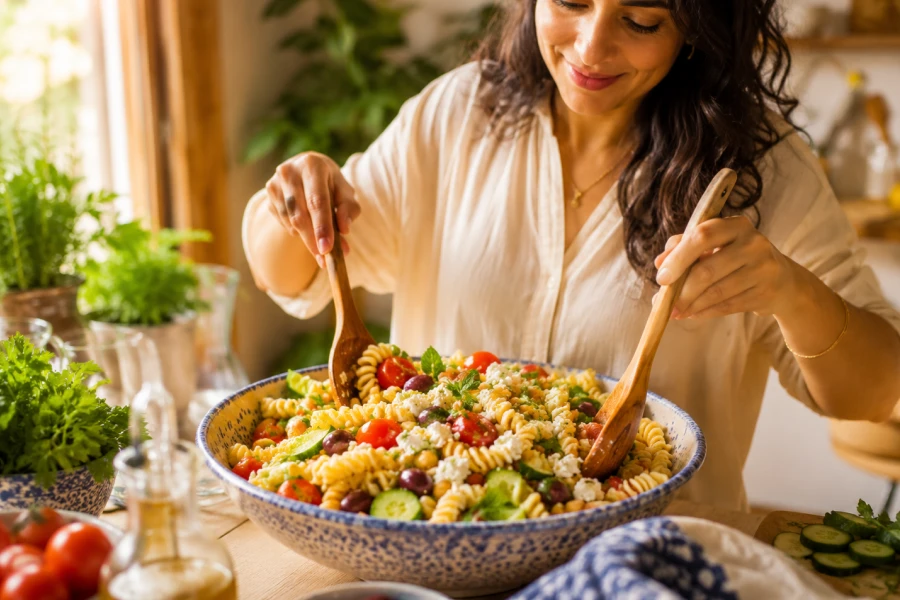
A good cold pasta bowl can solve far more than a side-dish problem. Easy pasta salad recipes offer a flexible answer to lunches, picnics, quick dinners, and shared tables. They can be colorful without becoming fussy. They can feel generous without requiring a large budget. The secret is building a bowl with contrast rather than simply adding everything nearby. A thoughtful pasta salad planning approach gives each ingredient a job. Pasta supplies structure, while vegetables bring freshness and crunch. Protein or cheese adds substance, and dressing carries the theme. Once those roles are clear, a simple bowl becomes surprisingly satisfying.
Easy pasta salad recipes begin with pasta that is cooked with care. Salt the boiling water so the noodles taste seasoned from within. Stop cooking when the center is tender but still has some resilience. Overcooked pasta becomes soft after chilling and loses its shape. Drain it well so extra water does not thin the dressing. Toss the pasta briefly with a little oil if it will sit. Let it cool enough to avoid wilting delicate ingredients. Then add components in stages rather than all at once. This sequence protects both texture and color. It also makes the final bowl easier to adjust.
A satisfying bowl needs several kinds of texture. Crisp vegetables bring contrast to tender noodles. Chewy cheese, toasted nuts, or beans add substance. Fresh herbs make the whole mixture smell brighter. Pickled vegetables contribute sharpness and an appealing snap. Use creative pasta add-ins to prevent the bowl from feeling one-note. Choose two or three textures instead of chasing variety for its own sake. Each addition should answer a need in the finished salad. A crunchy note can make a creamy dressing taste lighter. A salty note can make sweet tomatoes taste more vivid.
Easy pasta salad recipes look more inviting when color comes naturally from ingredients. Try deep greens, red peppers, golden corn, purple cabbage, or orange carrots. The goal is not a rainbow for decoration alone. Different colors often bring different textures and flavors. A bright bowl also makes leftovers feel less repetitive. Cut vegetables into sizes that work with the pasta shape. Small pieces distribute more evenly through every forkful. Larger pieces create more dramatic bites. Keep the mix practical enough to eat without chasing ingredients around the bowl. Good visual balance usually leads to better eating balance.
Dressing should support the pasta instead of drowning it. Add part of it while the noodles are slightly warm. That helps the pasta absorb flavor without losing definition. Save the remaining dressing for a final refresh before serving. This method keeps chilled leftovers from tasting dry. Reach for pasta salad dressing ideas that match the ingredients rather than overpowering them. Creamy options pair well with crisp vegetables and smoked notes. Bright vinaigrettes suit herbs, beans, and Mediterranean-style additions. Taste after chilling because cold food mutes salt and acidity. A final squeeze of citrus may bring everything back into focus.
Easy pasta salad recipes keep lunches flexible because they welcome substitutions. Use whatever vegetables need attention before the next grocery trip. Swap chickpeas for chicken or feta for mozzarella. Leave out one item if it does not suit your household. Add a little more protein when the salad needs to become dinner. This flexibility makes the dish useful throughout the week. A bowl can start as a side and end as tomorrow’s packed lunch. Explore cold pasta meal prep strategies that protect freshness without complicating the process. Store delicate herbs separately when possible. Stir them in right before eating for a brighter finish.
Easy pasta salad recipes turn small extras into something useful and appealing. Half a cucumber, a handful of olives, or a little leftover corn can become part of the bowl. This is a practical way to reduce waste without eating the same dinner twice. Keep a few reliable bases on hand, such as short pasta, beans, and vinaigrette ingredients. Then the rest can change with the season or your mood. One week might lean creamy and crunchy. Another may be lemony, herb-filled, and full of roasted vegetables. The structure remains dependable while the personality shifts. That makes pasta salad an adaptable kitchen habit. It also makes meal planning feel less rigid.
Pasta salad earns its appeal by being easy to personalize. It can be casual enough for a quick lunch and thoughtful enough for guests. Start with a good pasta texture, then add contrast with intention. Use dressing as a connector rather than a cover. Let leftovers and fresh ingredients work together. A useful formula creates freedom, not repetition. Over time, you learn the combinations that your household wants again. Those combinations become valuable when time is short. The bowl becomes a dependable canvas for whatever is on hand. That is why this everyday dish keeps surprising people.




Leave a comment